Could a few cracks, faded striping, and a dull surface be warning you that your parking lot is aging faster than it should?
Most owners do not lose a parking lot all at once. The damage starts small. Water slips into narrow openings. Tires grind weak spots every day. The sun pulls oils out of the surface. Then the lot begins to look old, rough, and expensive. That is why commercial asphalt maintenance deserves attention long before major failure shows up.
A strong maintenance plan does more than keep pavement dark and neat. It protects the base, reduces repair volume, supports traffic flow, and stretches the service life of an asset that people use every day without thinking about it until it starts causing trouble.
What Happens to a Parking Lot Without Routine Commercial Asphalt Maintenance
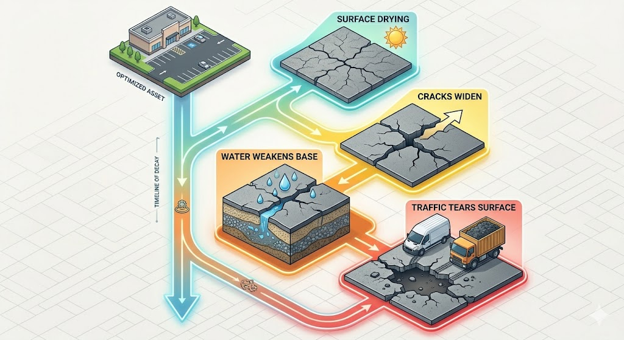
A neglected parking lot usually follows a predictable path. First, the surface dries out and loses flexibility. After that, hairline cracks widen. Water enters the top layer, reaches the base, and weakens support below the surface. Once that process starts, traffic does the rest. Delivery vans, turning tires, loaded trucks, and daily braking begin to tear at the same weak points.
The visible damage often looks minor in the early stage. That is where many owners lose time and money. They wait for potholes, broken edges, standing water, or trip hazards before taking action. By then, the cost no longer stays limited to a surface treatment. It moves into patching, base work, traffic disruption, and image problems.
A parking lot also affects how people judge a property. When striping fades, curbs break down, and entrances look worn, the site starts to look ignored. Customers notice it. Tenants notice it. Inspectors notice it.
How Commercial Asphalt Maintenance Turns Everyday Surfaces Into Long-Term Assets
A parking lot handles stress all day. Cars turn hard at entry points. Delivery traffic loads specific lanes. The weather keeps working on the same surface without pause. Owners who treat that pavement like a long-term asset usually spend less over time and avoid larger disruptions.
Closing Surface Gaps Before Water Starts Breaking the Base
Water creates the most serious damage in asphalt systems because it rarely stays where it first enters. It moves through cracks, reaches the lower layers, softens support, and weakens load capacity. Once that cycle begins, the lot may still look serviceable from above, but failure has already started below.
This is where commercial asphalt maintenance changes the outcome. Crack sealing and surface protection stop early openings from turning into structural repair zones. When crews treat the surface at the right stage, owners can gain 5 to 10 additional years on average when applied at the right time. That extension does not come from one product alone. It comes from acting before water and traffic combine into deeper failure.
Holding the Structure Together as Traffic Pressure Builds Daily
Traffic does not damage every section of a lot in the same way. Entrances, loading points, drive lanes, and turning areas carry the heaviest load. Those sections need closer review because repeated pressure speeds up fatigue in the surface and base.
The pattern usually looks like this:
| High-Stress Area | Early Warning Sign | Likely Result if Ignored |
|---|---|---|
| Entry lanes | Surface wear and light cracking | Raveling and deeper splits |
| Turning zones | Scuffing and texture loss | Surface break-up |
| Loading areas | Depressions and edge stress | Base fatigue and patch failure |
| Parking stalls | Faded lines and shallow cracks | Water intrusion and wider cracking |
Owners who inspect by traffic pattern, not by appearance alone, usually catch structural fatigue earlier. That keeps repairs smaller and keeps the lot in service longer.
Keeping Entry and Exit Flow Smooth for Customers and Staff
Parking lots do more than hold vehicles. They guide movement. A damaged surface interrupts that function fast. Rough transitions at the entrance, poorly marked drive paths, and neglected striping create hesitation, confusion, and unnecessary friction for drivers and pedestrians.
A smooth lot supports quick circulation and safer movement. Customers do not slow down to dodge broken edges. Staff do not deal with complaints about puddles or rough access points. Emergency vehicles and service traffic can move without obstruction. Property owners often focus on the pavement itself, but the bigger issue involves how the lot performs under daily use. Good surface upkeep protects that flow.
Protecting Against Fading, Rough Texture, and Surface Weakness
Sunlight, oxidation, fuel drips, water, and traffic all strip asphalt of the flexibility it needs. Over time, the surface loses color, then loses fines, then starts to wear out from the top down. That rough texture is not only a cosmetic issue. It often signals surface aging that will invite faster cracking.
That is why commercial asphalt maintenance works best as a preservation system, not a rescue step. Sealcoating, crack treatment, and targeted repairs hold the surface together and slow the rate of breakdown.
Cutting Down Sudden Repair Interruptions and Business Downtime
Big pavement failures not only raise repair bills. They interrupt business. A broken drive lane can redirect traffic. Emergency patching can block stalls. Poor timing can clash with peak customer hours or tenant activity. That kind of disruption brings indirect loss that rarely shows up in the first estimate.
Planned commercial asphalt maintenance reduces those interruptions because it gives owners control over timing, scope, and staging. Smaller treatments fit around operations far more easily than heavy reconstruction. They also allow phased work, which keeps access open and limits friction for tenants, visitors, and staff.
Preserving a Polished Look That Shapes First Impressions Instantly
People read a property before they enter it. They see the lot, the striping, the curbs, the approach, and the texture of the surface. A worn parking lot can make a well-run site look dated. A neat lot signals that the owner pays attention to the property as a whole.
That visual effect carries weight in retail, office, healthcare, industrial, and mixed-use settings. A polished surface supports leasing conversations, customer trust, and day-to-day presentation. Owners often spend large sums on facades and interiors while leaving pavement on a delay cycle. That choice weakens the first thing visitors see.
What Sets Long-Lasting Parking Lots Apart in Black Dawg Sealcoat Projects
At Black Dawg Sealcoat, we form parking lot maintenance around preservation, not a quick coat of blacktop that looks good for a few weeks and then fades back into the same problems. A commercial lot takes daily abuse from traffic, weather, oil, standing water, snow removal, and heavy turning. Small cracks do not stay small for long, especially when water gets in and temperatures shift.
That is why our work connects sealcoating with crackfilling, repair planning, striping, and routine upkeep. The goal is simple: help property owners protect the pavement they already paid for instead of waiting until the lot needs expensive reconstruction.
Key points that make the Black Dawg approach stronger:
● We form the maintenance plan around pavement life, not only appearance.
● Sealcoating, crackfilling, repairs, striping, and ADA-related support work together instead of being treated as separate fixes.
● Hot rubber crackfiller helps address cracks before water and freeze-thaw movement make the damage worse.
● Climate-adjusted sealant mixes matter because pavement in New England does not face the same conditions every month.
● Fresh striping improves traffic flow, parking order, pedestrian safety, and the overall look of the property.
● Routine upkeep can reduce liability concerns by helping owners deal with faded markings, surface wear, cracks, and trip-risk areas earlier.
● A long-lasting lot usually comes from steady maintenance, not one big repair after years of delay.
Timing Commercial Asphalt Maintenance Right for Maximum Lifespan Gains
Timing decides whether an owner pays for preservation or pays for correction. The best moment for service usually comes before deep cracking, widespread raveling, and drainage failure appear. Once those issues spread, surface treatments lose reach, and structural work starts taking over.
A disciplined schedule also protects the budget. Owners often overlook the downstream math, but regular care can mean $6 to $10 saved in future reconstruction or major rehabilitation expenses. That is why the calendar matters as much as the treatment itself.
We advise owners to review pavement condition by season, traffic load, drainage behavior, and surface age instead of waiting for visible failure. We also recommend pairing sealcoating with crack sealing, patch review, and striping updates so the lot works as one system. The earlier the owner acts inside the preservation window, the more options stay on the table.
Conclusion
A parking lot does not fail because one bad day hits it. It fails because small defects stayed in place while water, traffic, and time kept pushing harder. Commercial asphalt maintenance can extend service life by years when owners treat it as planned asset care instead of delayed repair. If your lot shows early wear, fading, rough texture, or growing cracks, now is the time to step in before the cost moves higher.
Talk to a team that knows how to protect the surface, the base, and the image of your property, and let us map out the next steps together as we do the work right.
FAQs
-
Most commercial sites should inspect pavement at least twice a year, plus after severe weather or heavy traffic periods. High-use lots may need closer review because entrance lanes and loading areas wear faster than standard parking stalls.
-
Yes. Oil softens asphalt and can interfere with surface treatments if crews skip prep work. Contractors should clean, treat, and repair oil-damaged spots before applying any protective coating.
-
Striping should come after the surface treatment cures. If crews paint too early, the lines can fail faster, look uneven, or wear away before the lot completes a normal service cycle.
-
Yes. Drainage problems often damage the lower layers first. A lot may look decent on top, while water weakens the base below. That hidden moisture can shorten service life fast.
-
In many cases, yes. Contractors can phase the work by zone, schedule around low-traffic hours, and keep access open where possible. Good staging plans reduce disruption and keep tenant or customer movement under control.