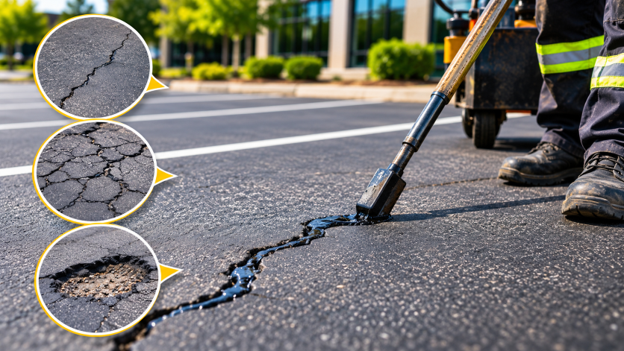
Walk across most parking lots, and you will find them: a thin line near the entrance, a crack along a drain, a corner where the edge has started to crumble. They all get called cracks, so they all get the same shrug.
But they are not the same problem, and the wrong fix wastes money. Parking lot crack sealing works well on some cracks and does very little for others. Here is how to tell the difference before you call anyone.
Why a Small Crack Gets Expensive
Cracks are the first sign of real trouble in any pavement. When rain or snow gets into those small gaps, the ground underneath softens and sinks. That can lead to sinkholes that are very hard to fix later.
The goal of sealing is simple: keep water out of the stone base under your lot. Meanwhile, a worn, gray surface sends a poor message to customers, and uneven ground can cause accidents.
A Simple Triage: Seal, Patch, or Sealcoat?
Ask three questions about any crack. Is the pavement around it still firm? Is it a single line or part of a web? Are the edges holding together?
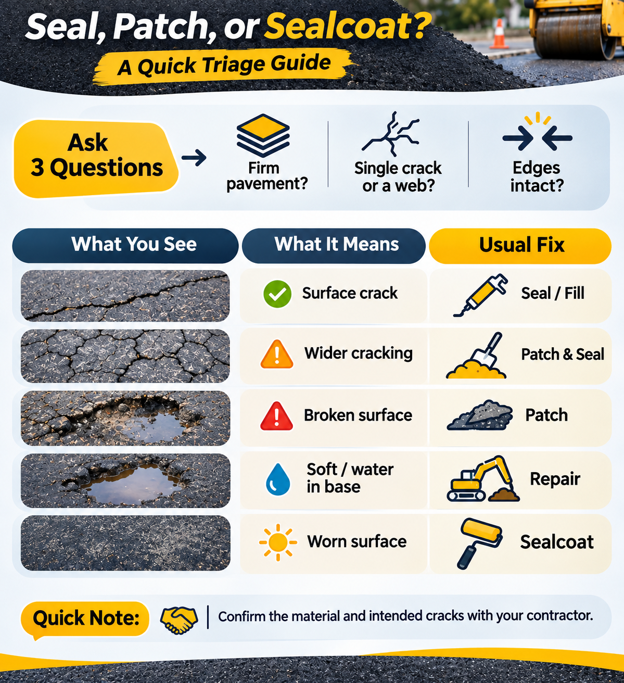
Then match what you see to the usual fix:
| What you see | What it usually means | Usual fix |
|---|---|---|
| A single line crack in firm pavement | Surface cracking, base still holding | Crack sealing or crack filling |
| Many cracks linked in a web or block pattern | The surface may be failing from below | Repair or patch, then seal what remains |
| Crumbling edges or potholes | The surface has broken apart | Patch: remove broken sections and fill with fresh material |
| Soft, sinking, or puddled spots | Water may have reached the base | Repair the area first |
| Faded, rough surface with cracks already sealed | Sun and traffic wear | Sealcoating |
A quick note on words. Contractors use crack sealing and crack filling in different ways, and some use them for the same job. When you compare quotes, ask each contractor to name the material and which cracks it is meant for.
What Parking Lot Crack Sealing Can and Cannot Do
What it does well: it fills gaps so water cannot reach the base, and it slows small cracks from growing into big failures.
Black Dawg Sealcoat uses hot rubber crack filler for this. It is not forever, but it lasts several years, and it is one of the most effective ways to prevent water damage and extend the life of a lot.
What it cannot do: it cannot firm up a soft base, rebuild a crumbling edge, or fix a pothole. Those need asphalt parking lot repair, where broken sections are removed and filled with fresh material so the surface is level and safe. Sealing over a failing area just hides the problem for a short while.
Why the Order Matters: Repair, Seal, Then Sealcoat
Sealcoating is a surface layer. Thick sealer shields the pavement from gas spills and hot sun, and it keeps the surface from turning brittle and gray. It is not built to rescue a damaged lot. Severely damaged pavement with deep cracks or potholes should be repaired first.
That sets a sensible order of work:
Repair broken sections and potholes.
Seal the remaining cracks.
Sealcoat the surface. Most commercial lots need this every two or three years, depending on traffic and local weather.
Repaint the lines so the lot looks sharp and stays organized for drivers.
Skipping a step costs more later. Skipping asphalt parking lot maintenance altogether usually costs the most.
Walk Your Lot Before You Call
You do not need special tools to start.
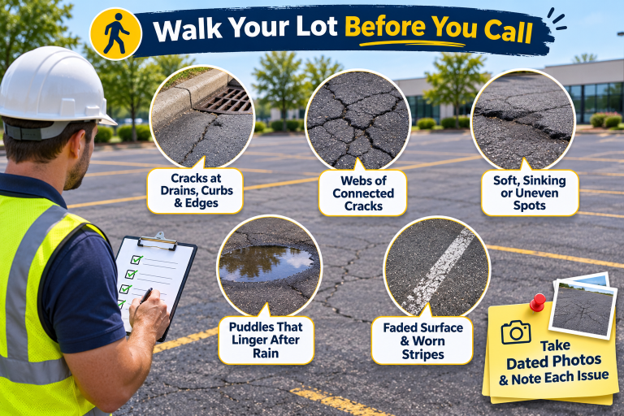
Take ten minutes and look for:
● Cracks along drains, curbs, and edges
● Webs of connected cracks
● Soft, sinking, or uneven spots
● Puddles that linger after rain
● Faded surface and worn stripes
Take dated photos and note where each problem is. Sort each one into the triage table above. Keep that list handy when you request a quote for parking lot crack sealing, so you can compare what each contractor plans to seal, what they plan to patch, and in what order.
FAQs
How often should I seal my lot?
Most commercial lots need sealcoating every two or three years. The timing depends on how much traffic the lot gets and the weather where you are. Crack treatment is a separate job and lasts several years.
Can large potholes be fixed?
Yes. The usual repair removes the broken section and fills it with fresh material so the surface is level and safe for drivers.
Is crack sealing a permanent fix?
No. It is not forever, but it typically lasts several years. It is one of the best ways to prevent water damage and extend the life of the lot.
Why not just sealcoat over the cracks?
Sealcoat protects the surface from sun and spills, but it is not meant to repair damage. Cracks and broken areas are treated first so the sealer has a sound surface to protect.
The Final Words
Not sure what category your lot falls into?
Black Dawg Sealcoat offers a free asphalt parking lot inspection and a clear plan for parking lot crack sealing, patching, and sealcoating in the right order. Since 1987, our team has completed more than 500,000 jobs across 18 states.
Request a free quote to get started.