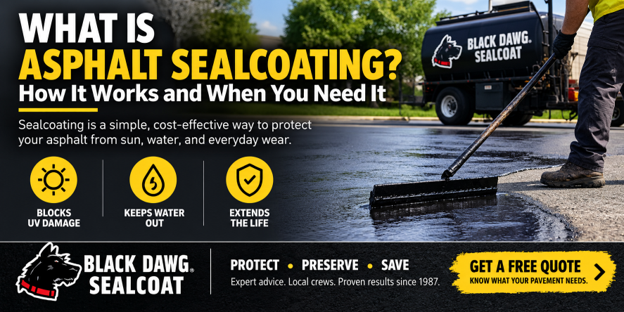
Asphalt looks permanent, so it's easy to forget it has a shelf life. What is asphalt sealcoating? It's a liquid protective coating applied over the surface of asphalt to slow the damage that sun and water cause. Think of it as a shield for pavement that's still in good shape.
Black Dawg Sealcoat has applied it to driveways and parking lots since 1987, and the same two questions come up every time: how does it work, and does mine need it? Here are straight answers.
What Does Asphalt Sealcoating Protect Against?
Mainly two things: sun and water.
Asphalt is crushed stone held together by a sticky binder. Sunlight slowly dries that binder out, a process called oxidation. That's why black pavement turns gray and then brittle. Once the surface is brittle, water finds it easier to get in.
Water is the second problem. It settles into small openings, and in cold weather it freezes and expands, pushing those openings wider. Add tires, oil, and fuel drips, and you can see why unprotected pavement ages faster.
How Does Sealcoating Work?
It puts a thin, sacrificial layer between your pavement and everything wearing it down.
The sealer sits on top of the asphalt. It slows oxidation, helps keep water from penetrating the surface, and restores that rich black finish. Quality sealers use carefully blended additives, and the blend can be tailored to your climate.
In general, a job runs in a simple order: the surface is cleaned, cracks are filled, the sealer goes down, and the pavement cures before traffic returns. Ask your contractor how long that cure takes for your job, because weather changes it.
What Sealcoating Is Not
It isn't paving, and it isn't repair. A sealcoat is thin. It won't raise low spots, fill structural cracks, or rebuild crumbling edges. Sealcoat and crack filler protect and preserve, but they do not correct structural failure.
That matters because some people expect a sealcoat to make bad pavement good. It makes good pavement last. An honest contractor will tell you which one you have.
When Do You Need Sealcoating? Start With What Your Pavement Looks Like
Skip the calendar and look at the surface first. Most pavement falls into one of three situations:
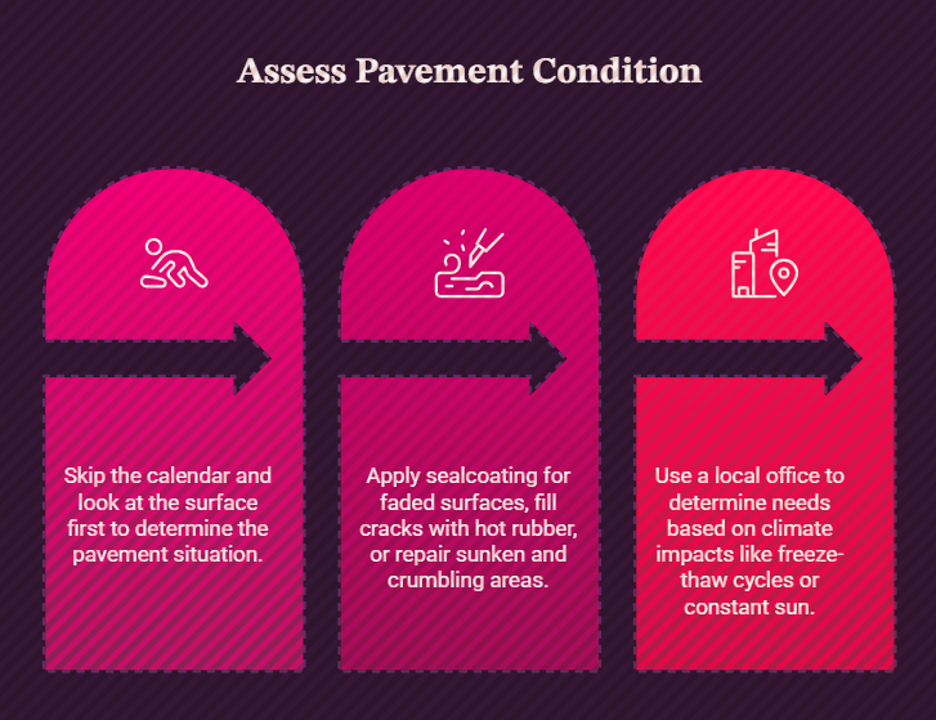
● Faded but smooth: sealcoating is usually the right call.
● Cracks showing: fill the cracks with hot rubber crack filler first, then sealcoat the surface.
● Sunken areas, crumbling edges, or deep cracks: repair comes first, and sealcoating alone won't help.
Climate changes the pace. Freeze and thaw cycles work hard on pavement in northern Minnesota and New England, while constant sun wears on pavement in Florida. That's why a local office, not a one-size-fits-all schedule, should tell you what your pavement needs.
When Should You Call an Asphalt Maintenance Company?
When you can't tell which of those three situations you're in, or when the damage looks deeper than the surface.
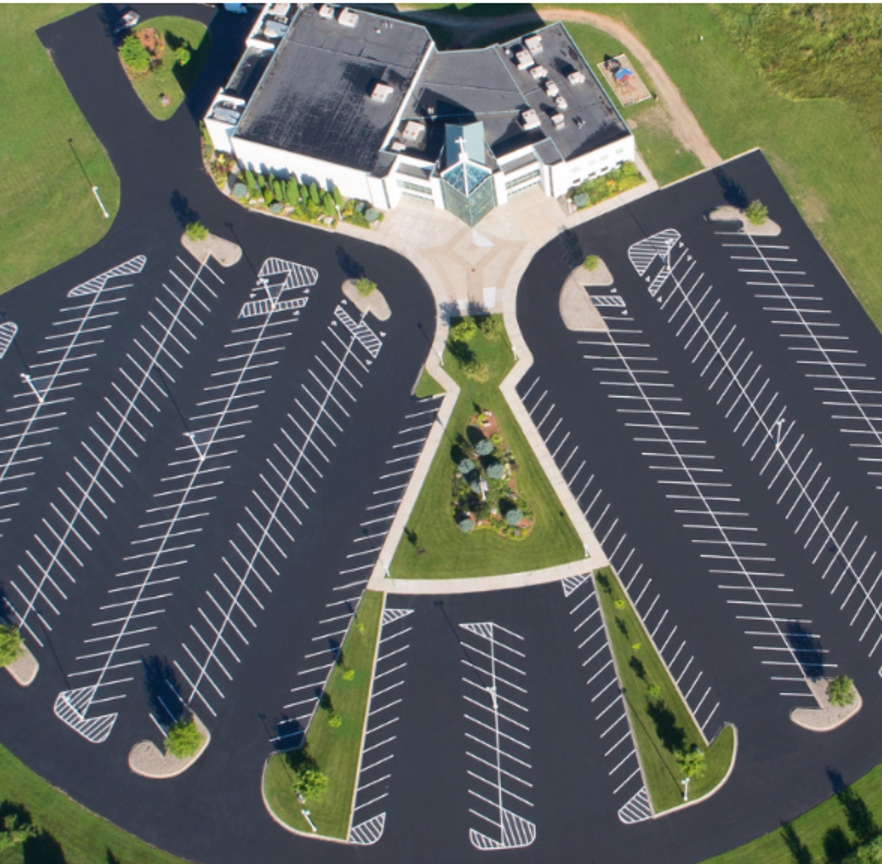
A good asphalt maintenance company will walk the pavement with you, name what it sees, and tell you what can and cannot be done. It should also handle more than one fix, since sealcoating, crack filling, and patchwork often come up together on the same property.
Black Dawg Sealcoat, together with its sister company Jet-Black, is the largest asphalt sealcoating company in the United States. Since 1987, the two have completed over 500,000 projects.
The work is done by locally owned and operated businesses in 18 states, from the mountains of Colorado to the lakes of northern Minnesota, New England, and Florida, so the asphalt maintenance company that shows up is a local one. Rigorous quality control standards back that work.
Frequently Asked Questions
What is asphalt sealcoating made of?
It's a liquid sealer blended with additives, and the blend can be tailored to the climate where it's used. Exact formulas vary by product. Ask any contractor which sealer they use and why it suits your area.
Is sealcoating the same as repaving?
No. Repaving or resurfacing replaces or restores the surface, while sealcoating adds a thin protective layer to pavement that's still sound. They solve different problems, and one can't stand in for the other.
Does sealcoating stop water from getting into asphalt?
It helps keep water out of the surface, but it can't seal an open crack on its own. Cracks need hot rubber crack filler first, and then the sealcoat protects the surface around them.
Can one asphalt maintenance company handle sealcoating and repairs?
Many can. Sealcoating, crack filling, and patchwork often come from the same company, while larger repairs such as saw-cut work or resurfacing are offered at participating locations. Ask your local office what it covers before you book.
Know What Your Pavement Needs Before You Spend Anything
Sealcoating is simple once you see it for what it is: a protective layer that slows aging on pavement that's still in good shape. Used at the right time, it keeps small problems small. Used on damaged pavement, it only covers them up.
Not sure which one you're dealing with?
Request a free quote from Black Dawg Sealcoat and get honest advice on what can and cannot be done.