
Professional Garage Apron Repair with Hot Asphalt
When asphalt sinks, cracks, or opens up where the driveway meets the garage, the problem often goes deeper than the surface. This high-stress area handles daily vehicle weight, water runoff, freeze-thaw movement, and gradual base failure.
Black Dawg Sealcoat provides garage apron repair using hot asphalt, so the repair holds up better and looks cleaner than a temporary patch.
Garage Apron Damage
The apron area takes more stress than most parts of the driveway. It handles repeated vehicle weight, water runoff, freeze-thaw movement, and pressure where the asphalt meets the garage concrete. Over time, that stress can cause the asphalt to sink, crack, or pull away from the surface around it.
In many cases, the real issue starts below the surface. Water can weaken the base under the asphalt, and once the support shifts, the apron begins to settle. That is why surface patching alone often does not last. A proper garage apron repair should address both the failed asphalt and the underlying support that caused the damage in the first place.
Consistent asphalt parking lot maintenance follows the same logic on a larger scale, catching base and drainage problems early, before they force a full repair.

Apron Replacements vs. Overlay Repairs
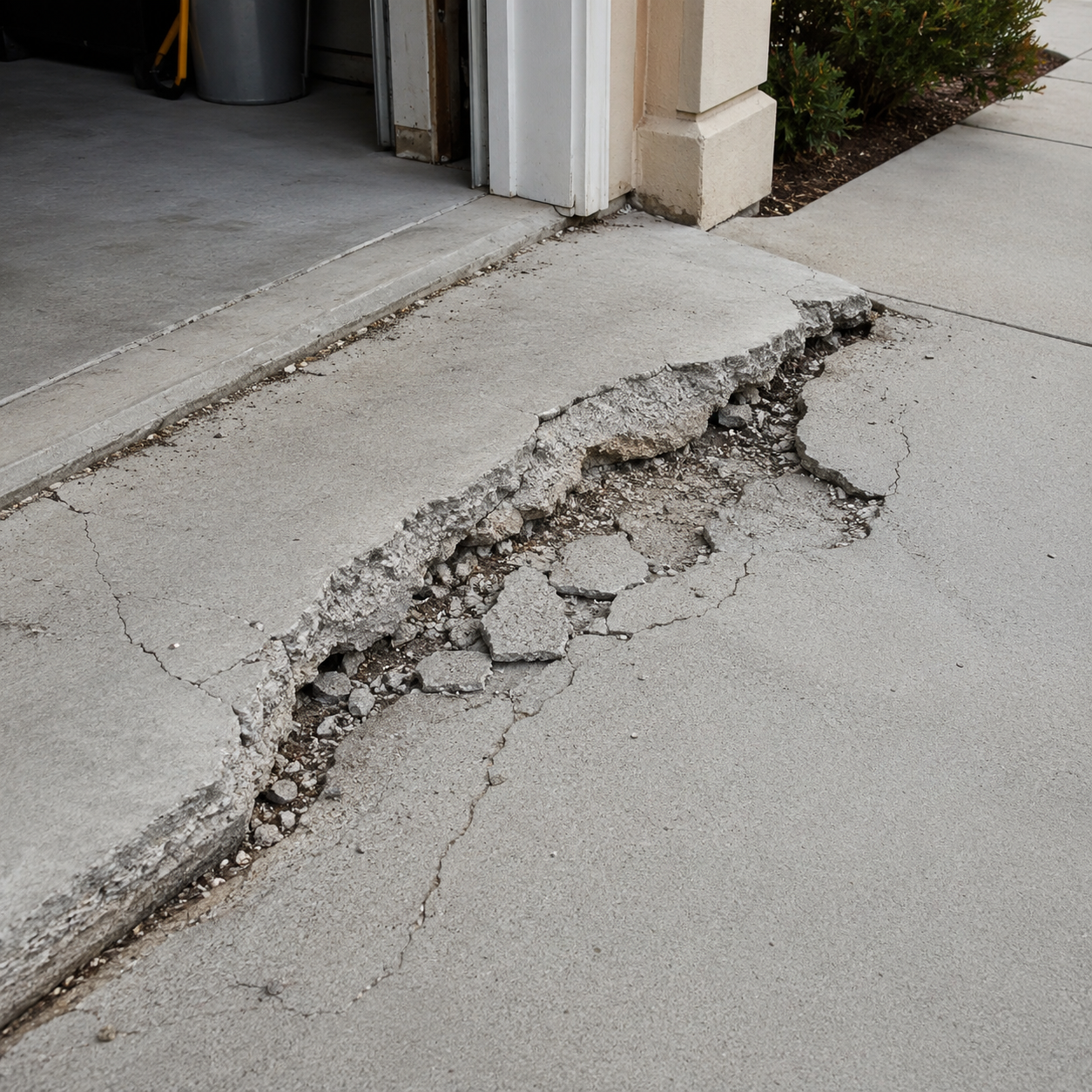
A full apron repair becomes necessary when the asphalt has sunk badly or when deep holes develop where the asphalt meets the garage concrete. In many cases, those holes extend toward the foundation area, which makes a full cut-out and replacement the smarter long-term fix.
Overlay repairs can work in limited situations and may cost less upfront. But they usually do not solve the support problem underneath. They can also look patchy and tend to have a shorter lifespan. For homeowners comparing garage apron repair costs, the lowest upfront option is not always the most durable one.
Saw-Cut Repairs for Damaged Asphalt
Not every repair has to be limited to the apron. Saw-cut repairs can also remove and replace failed asphalt elsewhere on the driveway or parking area. This is a practical option when certain sections are broken down, but the rest of the pavement is still sound. The same saw-cut process applies to asphalt parking lot repair when isolated sections fail while the surrounding lot remains structurally sound.
If the surrounding surface is in good condition, garage seal coating can later help protect the repaired area and support a more uniform finish across the driveway. The same principle applies to parking lot seal coating, which protects larger paved areas from UV damage and water penetration once repairs are complete. We offer saw-cut repairs as a similar process for damaged asphalt on driveways or parking lots, and our broader site highlights sealcoating, crack sealing, and patchwork as core services. For larger properties, parking lot crack sealing follows the same hot rubber process used on garage aprons and driveways.
Why apron replacements are important
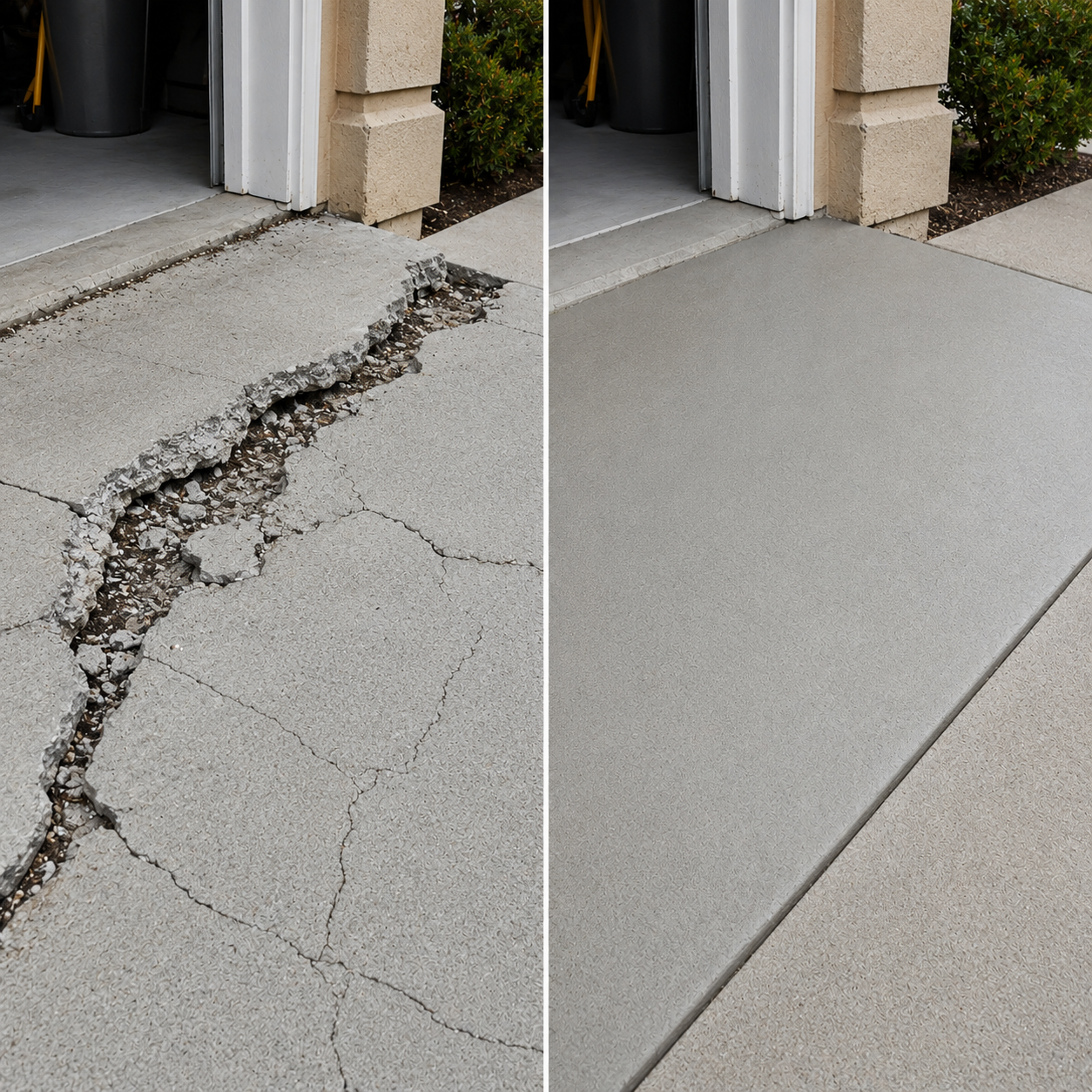
The apron area lies right next to one of the most sensitive parts of the structure. If water, salt, and seasonal shifting keep working into open gaps and deep voids, the damage can spread below the surface and weaken the area near the garage foundation.
That is why asphalt repair for garages should focus on both the visible failure and the base below it. Deep holes along the asphalt and concrete junction make apron replacement necessary, and the overlays do not address the root cause.

Q & A
What causes the garage apron to sink?
Water intrusion, weak base support, traffic weight, and freeze-thaw movement are common causes.
Is an overlay enough for apron damage?
Sometimes for minor issues, but a deeper failure usually needs full removal and replacement.
Do you handle asphalt parking lot repair in addition to garage aprons?
Yes. The same hot asphalt and saw-cut repair methods we use on garage aprons apply to asphalt parking lot repair, including sunken sections, isolated potholes, and areas where the base has failed beneath the surface.
Can repaired asphalt also be sealcoated later?
Yes. Once the repaired area has properly cured, garage seal coating can help protect the surrounding surface.
What's the difference between parking lot seal coating and parking lot crack sealing?
Parking lot seal coating applies a protective layer over the full pavement surface to slow UV damage, oxidation, and water penetration. Parking lot crack sealing targets individual cracks with hot rubber filler to keep water out before it can undermine the base. Most properties benefit from both, often scheduled together.
How often should asphalt parking lot maintenance be scheduled?
Most commercial lots hold up best with sealcoating and crack sealing every 2–3 years as part of routine asphalt parking lot maintenance, with spot repairs like saw-cuts or apron work addressed as soon as they're noticed rather than left to spread.