Commercial asphalt surfaces face constant wear from heavy traffic, changing weather, moisture, and daily use. Over time, even small cracks can develop into larger problems that affect both safety and appearance. Choosing the right repair method at the right time helps extend pavement life while reducing the need for expensive repairs later.
Understanding the difference between crack sealing and crack filling allows property owners and managers to make informed maintenance decisions. This guide explains how each method works, when it should be used, and why proper asphalt maintenance matters for long-term pavement performance.
Understanding Asphalt Cracks
Cracks are one of the earliest signs that an asphalt surface needs attention. They may appear due to temperature changes, moisture penetration, heavy vehicle loads, or the natural aging of asphalt. Although some cracks seem minor at first, they can quickly expand if they are left untreated.
Ignoring cracks allows water to enter the pavement structure, which may weaken the base and increase the risk of potholes and larger structural failures. Early repairs help preserve the condition of commercial asphalt and improve its overall lifespan.
What Is Crack Sealing?
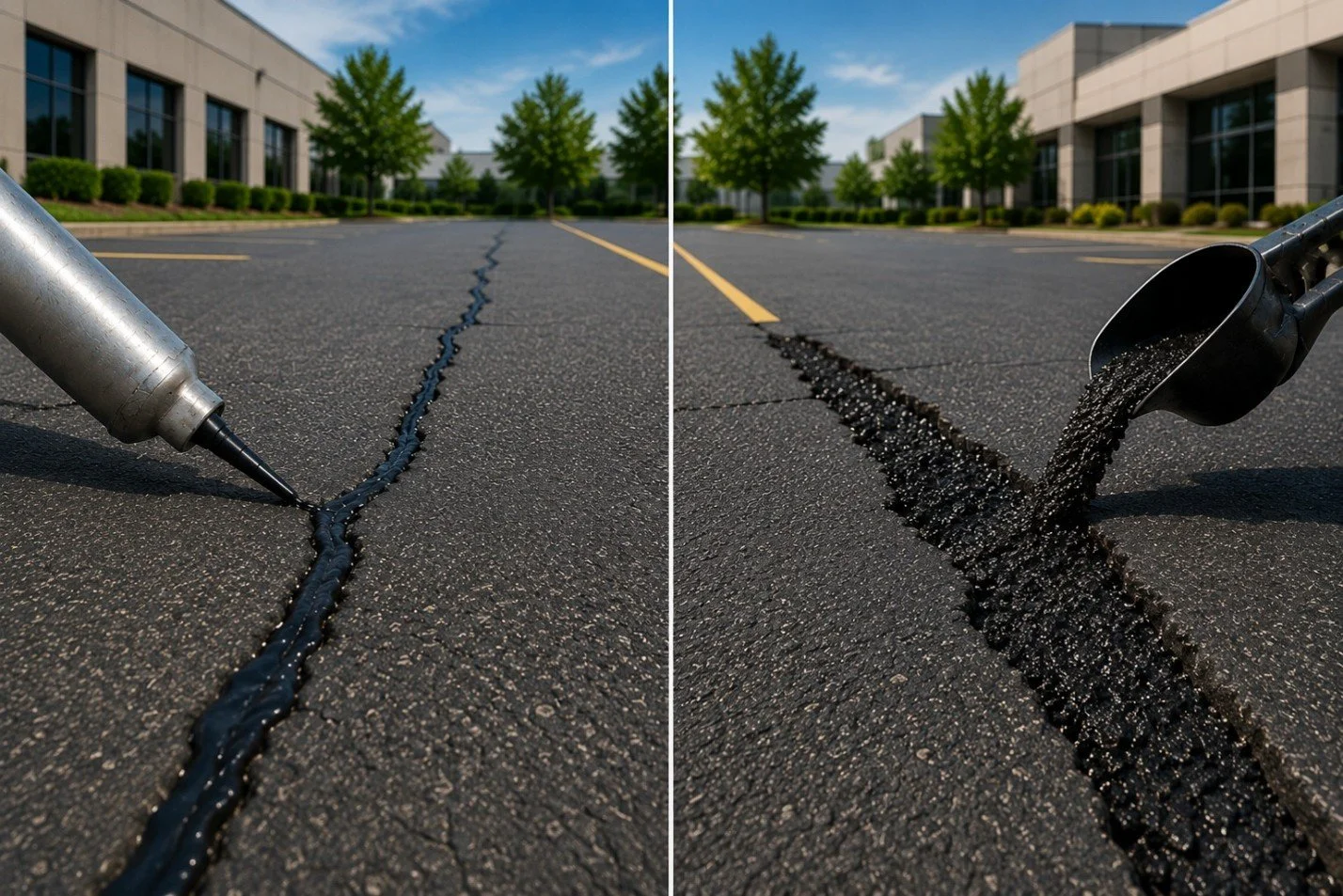
Crack sealing is a repair method designed for active cracks that continue to expand and contract because of changing temperatures. A specialized flexible sealant is applied after the crack has been properly cleaned and prepared.
The sealant moves with the pavement, helping to prevent water, debris, and other materials from entering the crack. This process provides long-lasting protection for asphalt surfaces that experience seasonal movement.
Some key benefits of crack sealing include:
● Creates a flexible barrier against moisture.
● Helps prevent cracks from becoming larger.
● Extends the service life of asphalt pavement.
● Reduces the likelihood of costly structural repairs.
● Supports long-term pavement maintenance.
What Is Crack Filling?
Crack filling is generally used for non-moving or stable cracks that are not expected to expand significantly over time. Instead of creating a highly flexible seal, the filler occupies the open space to reduce water intrusion and improve the pavement's appearance.
This method is often suitable for older pavement where movement is minimal and the goal is to slow further deterioration rather than accommodate constant expansion.
Crack filling may be appropriate when:
● The cracks remain relatively stable.
● Pavement movement is limited.
● A cost-effective maintenance solution is needed.
● Surface appearance needs improvement.
● Minor cracks require preventive attention.
Crack Sealing vs. Crack Filling: A Quick Comparison
| Feature | Crack Sealing | Crack Filling |
|---|---|---|
| Best for | Active, moving cracks | Stable, non-moving cracks |
| Flexibility | High | Moderate |
| Durability | Long-lasting | Good for preventive maintenance |
| Moisture Protection | Excellent | Good |
| Ideal Purpose | Prevents future crack growth | Slows pavement deterioration |
When Should Commercial Asphalt Be Crack Sealed?
Commercial properties often experience heavy vehicle traffic that places continuous stress on asphalt surfaces. Active cracks should be sealed before water reaches the pavement base, especially before colder seasons or periods of heavy rainfall.
Crack sealing is often the preferred choice when:
● Cracks regularly widen and narrow with seasonal changes.
● Water infiltration is becoming a concern.
● Preventive maintenance is a priority.
● The pavement remains structurally sound.
● Long-term durability is the primary goal.
Choosing timely commercial asphalt repair services helps protect valuable pavement investments before damage becomes more extensive.
When Is Crack Filling the Better Option?
Crack filling works well when pavement movement is limited and cracks remain relatively unchanged throughout the year. While it may not offer the same flexibility as crack sealing, it still plays an important role in preventive asphalt maintenance.
Crack filling is often selected for:
● Older pavement with stable cracks.
● Minor surface deterioration.
● Budget-conscious maintenance planning.
● Areas requiring improved surface appearance.
● Preventive repairs before further damage develops.
Understanding the condition of the pavement allows maintenance professionals to determine whether filling or sealing provides the better long-term solution.
Why Early Repairs Matter
Many commercial property owners delay repairs because small cracks appear harmless. However, untreated cracks often become the starting point for much larger pavement problems.
Early maintenance offers several important advantages:
● Prevents water from weakening the pavement foundation.
● Helps reduce future repair costs.
● Improves driving and walking safety.
● Maintains a professional property appearance.
● Extends the overall life of commercial asphalt.
Scheduling commercial asphalt repair services at the first signs of damage often prevents more expensive restoration work in the future.
Choosing the Right Repair Method
Every asphalt surface experiences different levels of traffic, weather exposure, and aging. For that reason, there is no single repair solution that works for every situation. The right approach depends on the type of cracks, their movement, and the overall condition of the pavement.
When evaluating repair options, consider:
● Whether the cracks are active or stable.
● The age of the pavement.
● Local weather conditions.
● Expected traffic volume.
● Long-term maintenance goals.
Professional inspections help identify the most suitable repair strategy while ensuring the pavement receives the appropriate treatment.
The Importance of Quality Asphalt Maintenance
Effective asphalt maintenance involves more than simply repairing visible cracks. Using high-quality materials, following proper repair procedures, and maintaining consistent quality standards all contribute to longer-lasting pavement performance.
Black Dawg Sealcoat has built its reputation by focusing on durable asphalt maintenance solutions. Together with its sister company, Jet-Black, the company has completed more than 500,000 projects since 1987, making it the largest asphalt maintenance provider in the United States.
Its premium-grade sealer and crack filler are specifically engineered for durability and long-term protection. With locally owned and operated businesses across 18 states, Black Dawg Sealcoat remains committed to delivering consistent quality while maintaining strict quality control standards and never cutting corners.
Final Thoughts
Both crack sealing and crack filling play valuable roles in maintaining commercial asphalt, but selecting the right method depends on the condition of the pavement and the type of cracks present. Active cracks generally benefit from flexible crack sealing, while stable cracks may be effectively managed through crack filling.
Addressing pavement damage early helps prevent water intrusion, slows deterioration, and extends asphalt life. By understanding these repair methods and following a proactive maintenance approach, property owners can make informed decisions that protect their investment and keep commercial asphalt performing reliably for years to come.